0

November 17, 2025
The Psychology of Price: Why We Pay What We Pay
By: Center For Accounting Transformation / podcast
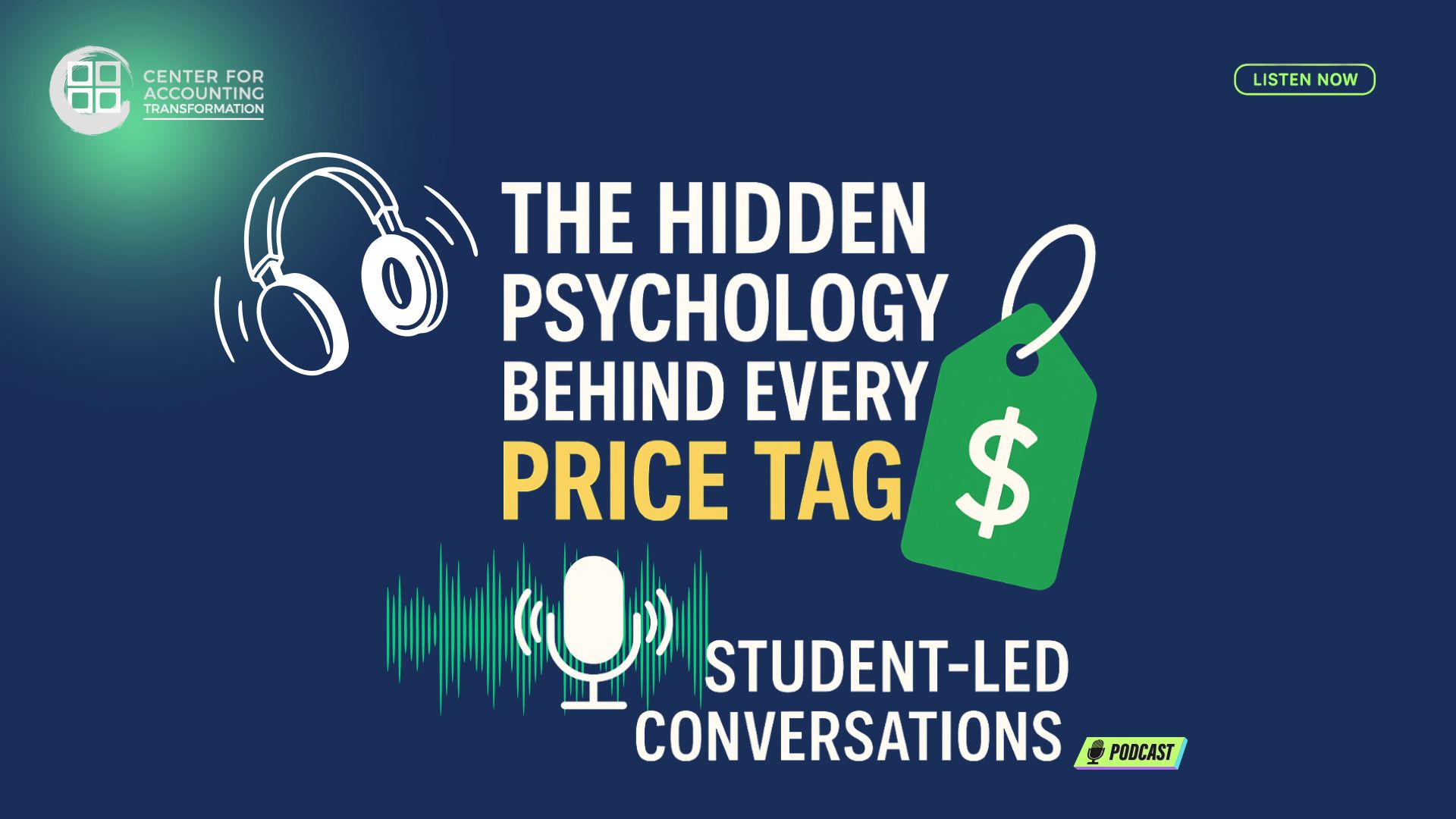
A Student-Led Conversation with Ron Baker
What makes someone gladly pay $6 for a Starbucks latte—or hesitate to buy the same coffee for half the price somewhere else?
In the latest episode of Student-Led Conversations, our student host sits down with pricing strategist, author, and self-proclaimed “recovering CPA”, Ron Baker for a deep dive into the psychology of pricing—the art of how emotion, story, and perception shape what we believe something is worth.
Value Isn’t Math—It’s Emotion
“Value isn’t math. It’s emotion,” Baker shares early in the episode.
He explains that while many people think of pricing as a financial formula, it’s really about human behavior. A price tag doesn’t just reflect cost—it communicates meaning. The number you see represents a story about brand, quality, and experience.
Pricing, Baker says, “isn’t a science—it’s an art.” Humans aren’t predictable like atoms, so setting prices isn’t about equations. It’s about understanding what makes people feel something is worth their money.
From Starbucks to Popcorn: The Hidden Power of Design
The conversation explores real-world examples that students, professionals, and everyday consumers will instantly recognize:
- Starbucks uses “menu engineering” to influence choices. No dollar signs, Italian-size names like Grande and Venti, and a cozy “third space” environment make us focus less on cost and more on comfort.
- Movie theaters keep popcorn prices high—not to “gouge” customers, but to identify who values the full experience. Those willing to splurge on popcorn are the ones who define the theater’s profit margins.
- Luxury brands like Porsche or Prada never run sales, because a lower price would damage their aura of exclusivity.
- Streaming services such as Spotify and YouTube cleverly give customers a choice: pay with money, or pay with time by watching ads.
Once you notice these patterns, you’ll see pricing psychology everywhere—from campus cafés to your favorite apps.
How Pricing Psychology Affects Everyone
Whether you’re a high school student saving up for a concert ticket or a professional deciding on a new laptop, these ideas apply to everyone. Every price you see carries emotional weight. Discounts, packaging, store design—even the background music in a café—all subtly affect how you feel about buying something. As Baker points out, “price is a story.” Learning to read that story helps you make smarter choices as both a consumer and a future professional.
Why It Matters Beyond Business
Understanding pricing isn’t just for marketers or economists. It’s for anyone who interacts with money—which is all of us.
For students, this episode is a crash course in critical thinking and consumer awareness. For young professionals, it’s a reminder that success in business often depends less on numbers and more on understanding people.
And learning about pricing psychology can help consumers be less fooled by the pricing tricks we encounter in our day-to-day lives. Discover why “value isn’t math—it’s emotion,” and how that simple truth shapes nearly every buying decision we make.
🎧 Listen now to the full episode to explore how perception, storytelling, and emotion drive what we pay—and why.
Don’t miss an episode. Be sure to SUBSCRIBE below: